Planning & Scheduling Explained Simply
Learn planning & scheduling with real examples, tools, mistakes, and expert tips. A practical guide for students, engineers, and project managers.
 Suraj Manikpuri
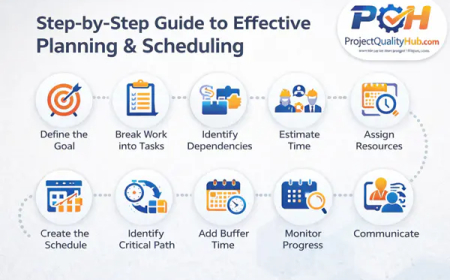
Why Planning & Scheduling Decide Success or Failure
Once I visited a steel plant project site where a large equipment installation was delayed by almost three months. The reason wasn’t lack of manpower or budget.
The real problem? Poor planning and scheduling.
Materials arrived late. Contractors didn’t know their priorities. Teams waited for instructions.
Everything looked busy… but nothing moved forward.
This is where planning & scheduling become the backbone of any successful project — whether it’s constructing a bridge, developing software, preparing for exams, or managing daily work.
Simply put:
Planning decides WHAT needs to be done.
Scheduling decides WHEN it should be done.
When both work together, projects move smoothly. When they don’t, chaos begins.
Let’s understand this powerful concept in a practical, easy way.
What is Planning?
Planning is the process of defining goals and deciding how to achieve them.
It answers questions like:
-
What work needs to be done?
-
Who will do the work?
-
What resources are required?
-
How much time and budget will be needed?
Think of planning as creating a roadmap before starting a journey.
Without a roadmap, you may still move — but you may reach the wrong destination.
Example
Suppose a company wants to install a new water pumping system in a plant.
Planning would include:
-
Designing pipeline layout
-
Identifying pump capacity
-
Ordering equipment
-
Preparing civil foundation
-
Arranging manpower
-
Estimating project cost
All these decisions happen during the planning phase.
What is Scheduling?
Scheduling is the process of arranging tasks in a timeline.
It answers questions like:
-
When will each task start?
-
When will it finish?
-
Which tasks depend on others?
-
What is the total project duration?
In simple words:
Planning decides tasks.
Scheduling decides time.
Example
Continuing the pump installation example:
| Task | Duration |
|---|---|
| Civil foundation | 10 days |
| Pump delivery | 15 days |
| Pump installation | 5 days |
| Pipeline connection | 7 days |
Scheduling will organize these tasks so that the project finishes in minimum time.
Planning vs Scheduling (Simple Comparison)
| Feature | Planning | Scheduling |
|---|---|---|
| Purpose | Define work | Arrange time |
| Focus | Strategy | Timeline |
| Stage | First step | After planning |
| Output | Work breakdown | Project timeline |
Both are equally important.
Without planning, scheduling has no direction.
Without scheduling, planning never becomes reality.
Why Planning & Scheduling Are So Important
Good planning and scheduling help in many ways.
1. Better Time Management
You know what to do and when to do it.
No last-minute panic.
2. Resource Optimization
Manpower, machines, and materials are used efficiently.
3. Reduced Project Delays
Dependencies are identified early.
4. Cost Control
Delays increase costs. Scheduling helps prevent them.
5. Clear Communication
Everyone in the team knows their responsibilities.
Real-Life Case Study: A Construction Project
Let’s take a simple construction example.
A small warehouse construction project includes:
-
Site preparation
-
Foundation work
-
Steel structure erection
-
Roofing installation
-
Electrical work
If these tasks are done randomly, the project will delay.
But with proper planning & scheduling:
-
Foundation finishes first
-
Steel structure starts immediately after
-
Roofing overlaps with structure completion
-
Electrical work runs parallel
The result?
The project finishes weeks earlier.
Frequently Asked Questions (FAQs)
1. What is the difference between planning and scheduling?
Planning defines the work to be done, while scheduling decides when the work will be done.
2. Why is planning important in project management?
Planning helps define goals, allocate resources, and organize tasks efficiently.
3. What tools are used for project scheduling?
Common tools include Gantt charts, CPM, PERT, Microsoft Project, and Primavera P6.
4. What is the critical path in scheduling?
The critical path is the longest sequence of dependent tasks that determines the total project duration.
5. Can small projects also require planning and scheduling?
Yes. Even small projects benefit from basic planning and scheduling to avoid confusion and delays.
Related articles :
Project Life Cycle Explained Simply: From Idea to Successful Project Completion
Step-by-Step Guide to Applying Project Life Cycle: A Practical Method Every Engineer Should Know