
Sample Management Formats for Labs (Complete Guide)
Learn practical sample management formats used in labs with real examples, mistakes, and expert tips for students and engineers.
 Suraj Manikpuri
🚀 Introduction: Ek chhoti si mistake, aur pura test fail!
Kuch saal pehle site lab mein ek incident hua tha. Ek important steel sample ka result mismatch aa raha tha. Investigation ke baad pata chala — sample labeling galat tha. Bas ek chhoti si entry mistake… aur pura batch reject hone wala tha.
Tab samajh aaya —
👉 Lab mein testing se bhi zyada important hota hai “sample management”
Agar sample track hi nahi ho pa raha, toh best equipment bhi useless hai.
Is article mein main aapko sample management formats ka complete practical guide dunga — simple language mein, real experience ke saath.
📋 What Are Sample Management Formats?
Simple words mein:
👉 Sample management formats = woh documents ya registers jo sample ko track karte hain from receipt to disposal
Yeh formats ensure karte hain:
-
Traceability (sample kahaan se aaya, kya hua)
-
Accuracy (koi mix-up na ho)
-
Compliance (ISO standards follow ho)
🧪 Types of Sample Management Formats (Must Know)
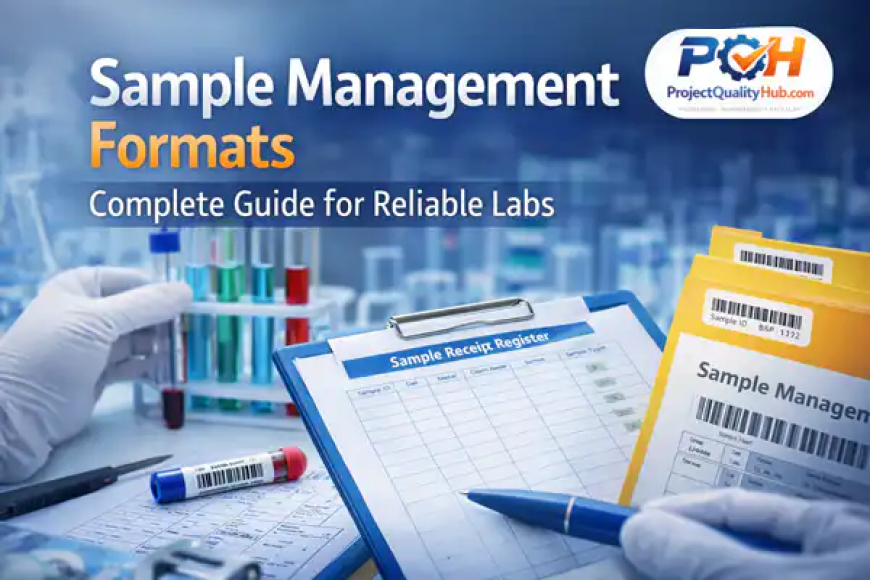
1. 📥 Sample Receipt Register
Yeh sabse important format hai.
Use: Jab bhi sample lab mein aata hai, entry yahin hoti hai.
Typical Fields:
-
Sample ID
-
Date & Time
-
Client / Department
-
Sample Type
-
Test Required
-
Received By
👉 Golden rule: “No entry = No testing”
2. 🏷️ Sample Identification & Labeling Sheet
Yeh ensure karta hai ki sample properly tagged ho.
Include:
-
Unique Sample Code
-
Batch No.
-
Heat No. (steel plant mein important)
-
Location
👉 Real Tip:
Marker se likhne ke bajay printed labels use karo — error kam hota hai.
3. 🔧 Sample Preparation Record
Har sample directly test nahi hota — pehle preparation hoti hai.
Track:
-
Cutting / polishing details
-
Preparation method
-
Operator name
-
Date
👉 Metallurgical labs mein yeh critical hai.
4. 🗂️ Sample Storage Log
Sab sample turant test nahi hote. Kuch store karne padte hain.
Fields:
-
Storage location (rack/shelf no.)
-
Condition (ambient/refrigerated)
-
Storage date
👉 Example: Chemical samples ko controlled temperature mein store karna padta hai.
5. 🗑️ Sample Disposal Record
Test ke baad sample ka kya hua?
Track:
-
Disposal date
-
Method (discard/return)
-
Approved by
👉 ISO audits mein yeh frequently check hota hai.
6. 🔄 Sample Movement Register
Agar sample ek section se doosre mein ja raha hai:
Track:
-
From → To
-
Date
-
Authorized person
👉 Useful for large labs & plants like Bhilai Steel Plant.
🏭 Real-Life Example (Steel Plant Case)
Maan lijiye plate mill se sample aaya:
-
Entry → Sample Receipt Register
-
Tagging → Sample ID sheet
-
Preparation → Cutting & polishing
-
Testing → Lab analysis
-
Storage → Retention sample
-
Disposal → After approval
👉 Agar koi bhi step missing hai → audit fail
🛠️ Step-by-Step: How to Create Sample Management Formats
Step 1: Define Sample Flow
Pehle decide karo:
👉 Sample lab mein aane se lekar disposal tak kya journey hai
Step 2: Create Basic Formats
Start with:
-
Receipt register
-
Label format
-
Storage log
Step 3: Add Unique ID System
Example:
👉 BSP-PLT-2026-001
Step 4: Standardize Entries
-
Same format
-
No shortcuts
-
No overwriting
Step 5: Digital Backup
Excel ya LIMS use karo
👉 Manual + Digital = Best combination
✅ Advantages of Proper Sample Management Formats
✔ Sample mix-up avoid hota hai
✔ Audit ready system
✔ Traceability 100% clear
✔ Faster testing workflow
✔ Client trust increase hota hai
❌ Disadvantages (Agar Proper System Nahi Hai)
❌ Wrong results
❌ Rework & delay
❌ Audit non-conformance
❌ Client complaints
❌ Financial loss
⚠️ Common Mistakes (Jo Most Labs Karte Hain)
-
Sample ID duplicate banana
-
Incomplete entries
-
Handwritten unclear labels
-
Storage location mention nahi karna
-
Disposal record ignore karna
👉 Yeh chhoti mistakes, bada problem ban jaati hain
💡 Expert Tips (Real Experience se)
⭐ Always use unique numbering system
⭐ “Received but not entered” situation kabhi allow mat karo
⭐ Color coding use karo (easy tracking ke liye)
⭐ Old records properly archive karo
⭐ Weekly audit karo (internal)
👉 Ek simple habit:
“Jo likha nahi gaya, woh hua hi nahi”
🔚 Conclusion: Strong Lab = Strong Documentation
Agar aap student ho, engineer ho, ya lab professional — ek baat yaad rakho:
👉 Testing accuracy sirf machine se nahi aati, system se aati hai
Sample Management Formats hi woh system hai jo lab ko reliable banata hai.
Chhota sa discipline, bada difference create karta hai.
❓ FAQs
1. Sample management format kya hota hai?
Yeh ek document system hota hai jo sample ko track karta hai from receipt to disposal.
2. Lab mein sabse important format kaunsa hai?
Sample Receipt Register sabse critical hota hai.
3. ISO 17025 ke liye sample management zaroori hai?
Haan, yeh mandatory requirement hai for traceability.
4. Kya Excel mein sample management kar sakte hain?
Bilkul, small labs ke liye Excel best option hai.
5. Sample labeling ka best method kya hai?
Printed labels + barcode system sabse reliable hai.