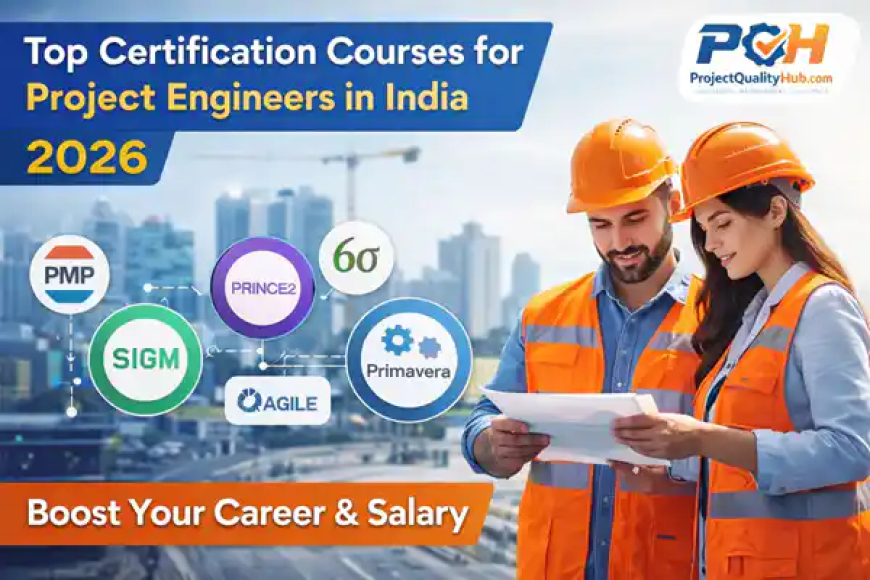
Top Certification Courses for Project Engineers in India 2026
Explore the best certification courses for Project Engineers and Project Managers in India (2026) to boost salary, leadership skills, and career growth.
 Suraj Manikpuri
Why Certifications Are Becoming a Game-Changer for Engineers
A few years ago, most engineers believed that experience alone was enough to grow in project roles. If you worked hard on site, handled vendors, managed timelines, and delivered projects successfully — promotions would naturally follow.
But the industry has changed.
Today, companies want structured project management skills, not just experience. Whether it's construction, manufacturing, IT, or infrastructure, organizations prefer professionals who understand global project management frameworks.
I have seen many capable engineers stuck in the same role for years. The moment they completed the right certification, their career trajectory changed dramatically — better roles, higher salaries, and leadership opportunities.
If you are a Project Engineer, Site Engineer, Planning Engineer, or aspiring Project Manager, the right certification can open doors you didn’t even know existed.
Let’s explore the best certification courses for Project Engineers and Project Managers in India in 2026.
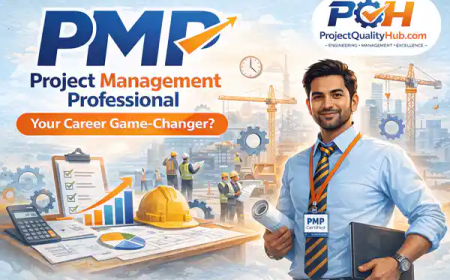
1. PMP (Project Management Professional)
Best For: Experienced Project Managers
The PMP certification from PMI (Project Management Institute) is considered the gold standard in project management worldwide.
Many global companies prefer PMP-certified professionals because the certification proves that the candidate understands structured project planning, risk management, stakeholder communication, and project execution frameworks.
Key Skills You Learn
-
Project planning and scheduling
-
Risk management
-
Stakeholder communication
-
Agile and hybrid project management
-
Budget and cost control
Eligibility
-
Bachelor's degree + 36 months project experience
-
OR diploma + 60 months experience
Duration
2–4 months preparation
Average Salary Impact in India
PMP-certified professionals often earn 20–30% higher salaries than non-certified peers.
2. PRINCE2 Certification
Best For: Structured Project Governance
PRINCE2 (Projects IN Controlled Environments) is widely used in government and large enterprise projects.
It focuses heavily on process-based project management, meaning every stage of a project is defined and controlled.
Why Engineers Like It
It is practical and structured. Engineers working in large EPC projects, infrastructure, and government contracts find it extremely useful.
Levels
-
PRINCE2 Foundation
-
PRINCE2 Practitioner
Duration
4–6 weeks preparation
3. PMI-ACP (Agile Certified Practitioner)
Best For: Agile and Hybrid Project Management
Many industries are shifting to Agile project management, especially in IT, product development, and technology-driven sectors.
PMI-ACP teaches frameworks such as:
-
Scrum
-
Kanban
-
Lean
-
Agile leadership
Even traditional engineering projects are adopting hybrid Agile approaches.
4. Six Sigma Certification (Green Belt / Black Belt)
Best For: Process Improvement Engineers
Six Sigma certifications focus on quality improvement and process optimization.
Industries where Six Sigma is extremely valuable:
-
Manufacturing
-
Steel plants
-
Automotive
-
Production engineering
-
Operations management
What You Learn
-
Process optimization
-
Data-driven decision making
-
Root cause analysis
-
Quality improvement techniques
For engineers working in manufacturing plants, this certification can be incredibly powerful.
5. Primavera P6 Certification
Best For: Planning Engineers
Primavera P6 is one of the most widely used project planning software tools in construction and infrastructure projects.
Planning engineers who know Primavera are highly valued because they can manage:
-
Project schedules
-
Resource allocation
-
Cost tracking
-
Delay analysis
In large EPC projects, Primavera is almost a mandatory skill.
6. Certified Associate in Project Management (CAPM)
Best For: Fresh Engineers
If you are a fresh graduate or early-career engineer, CAPM is an excellent starting point.
It introduces you to the fundamentals of project management before moving to advanced certifications like PMP.
Real Example: How Certification Changed an Engineer’s Career
Let’s consider a typical scenario.
Rahul was working as a site engineer in a construction company for 6 years. His role mostly involved site coordination and contractor supervision.
Despite his experience, promotions were slow.
He decided to complete PMP certification.
Within a year:
-
He moved into a Project Manager role
-
His salary increased by 35%
-
He started leading international projects
The certification didn't magically give him knowledge he didn't have — it validated and structured his experience.
How to Choose the Right Certification (Step-by-Step)
Step 1: Identify Your Career Direction
Ask yourself:
-
Planning Engineer → Primavera
-
Project Manager → PMP
-
Quality Engineer → Six Sigma
-
IT/Tech Project Manager → PMI-ACP
Step 2: Check Eligibility
Some certifications require project experience.
Step 3: Select a Reputed Training Provider
Examples include:
-
PMI Authorized Training Partners
-
Simplilearn
-
Coursera
-
Udemy
Step 4: Study Smart
Focus on:
-
Practice exams
-
Case studies
-
Real project scenarios
Advantages of Project Management Certifications
1. Higher Salary Potential
Certified professionals often earn 20–40% higher salaries.
2. Global Recognition
Certifications like PMP are recognized worldwide.
3. Better Career Opportunities
Companies prefer certified professionals for leadership roles.
4. Structured Knowledge
You learn global best practices in project management.
Disadvantages (Things Nobody Talks About)
Certification Alone Is Not Enough
Experience still matters.
Exam Fees Can Be Expensive
Some certifications cost ₹40,000 – ₹1,50,000.
Requires Continuous Learning
Many certifications require renewal or professional development units.
Common Mistakes Engineers Make
1. Choosing Certification Without Career Plan
Many people blindly do PMP or Six Sigma without knowing whether it fits their career path.
2. Ignoring Practical Application
Certifications should improve your real work, not just your resume.
3. Taking Too Many Courses
One strong certification is better than five random ones.
Pro Tips from Industry Experts
✔ Choose certification aligned with your industry and experience
✔ Focus on real project case studies while studying
✔ Combine certification with software skills (Primavera, MS Project)
✔ Update your LinkedIn profile after certification
Networking after certification can bring unexpected job opportunities.
Conclusion
The role of Project Engineers and Project Managers is evolving rapidly. Companies are no longer looking only for hardworking engineers — they want professionals who understand modern project management practices.
That’s where certifications play a crucial role.
Whether it is PMP, PRINCE2, Six Sigma, Primavera, or Agile certifications, the right course can significantly accelerate your career.
But remember one important thing.
Certification is not a shortcut to success. It is a tool that strengthens your knowledge, validates your experience, and prepares you for bigger responsibilities.
Choose wisely, learn deeply, and apply it in real projects.
Your career growth will follow.
Frequently Asked Questions (FAQs)
1. Which certification is best for project managers in India?
PMP is widely considered the most valuable certification for experienced project managers.
2. Which certification is best for project engineers?
Primavera P6, Six Sigma, and PMP are highly beneficial for project engineers.
3. Is PMP certification worth it in India?
Yes. Many companies prefer PMP-certified professionals and offer higher salaries and leadership roles.
4. How long does it take to prepare for PMP?
Most professionals prepare within 2–4 months with proper study plans.
5. Can fresh engineers pursue project management certification?
Yes. CAPM is designed specifically for fresh graduates and early-career engineers.
Related Article >> Top Certification Courses for Quality Engineers in India (2026)