
Coal Testing Equipment Guide for Labs
Complete guide on coal testing equipment used in labs with practical examples, uses, and expert tips for engineers and students.
 Suraj Manikpuri
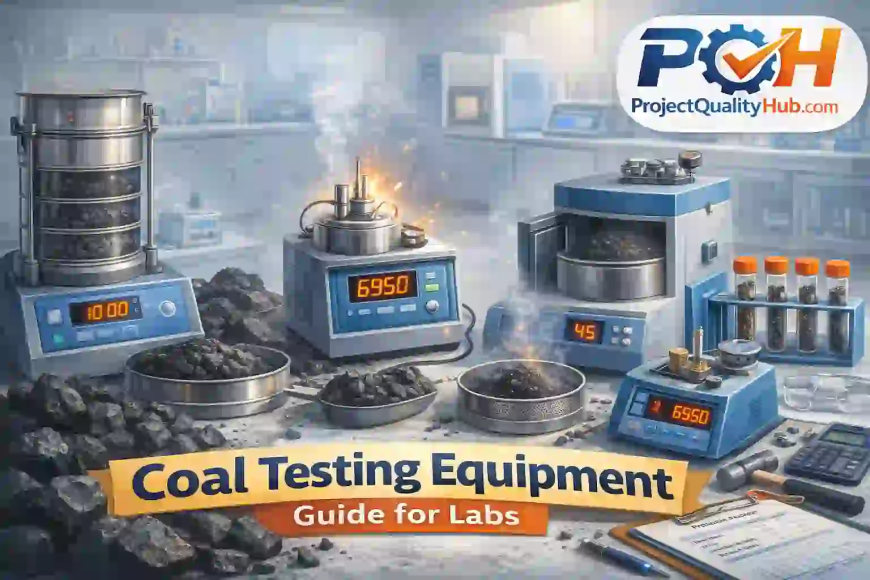
Why Coal Testing Matters More Than You Think
A few years back, during a site visit to a steel plant, I noticed something interesting. Two batches of coal looked exactly the same—same color, same size—but their performance in the furnace was completely different.
One burned efficiently, the other created excess ash and reduced output.
That day, I truly understood the importance of coal testing equipment in labs.
Coal may look simple, but its quality directly impacts power generation, steel production, and even cement manufacturing. Without proper testing, industries can lose lakhs of rupees daily.
So if you're a student, engineer, or lab technician—this guide will give you a clear, practical understanding of coal testing equipment.
🧰 What is Coal Testing Equipment?
Coal testing equipment includes a set of laboratory instruments used to analyze the physical and chemical properties of coal.
These tests help determine:
- Energy content
- Moisture level
- Ash content
- Volatile matter
- Fixed carbon
In simple words:
👉 “Coal dikhta ek jaisa hai, but performance test se hi pata chalta hai.”
🔬 Types of Coal Testing Equipment (With Practical Use)
1. 🔥 Bomb Calorimeter (Calorific Value Test)
This is one of the most important machines.
👉 It measures how much heat (energy) coal produces when burned.
Why it matters:
Higher calorific value = better fuel efficiency.
Real example:
In power plants, selecting coal with higher calorific value reduces fuel consumption.
2. 🧪 Proximate Analysis Equipment
This includes multiple tests:
- Moisture content
- Ash content
- Volatile matter
- Fixed carbon
Equipment used:
- Muffle Furnace
- Weighing Balance
- Oven
👉 This test gives a quick overview of coal quality.
3. 🌡️ Ultimate Analysis Equipment
This test measures:
- Carbon
- Hydrogen
- Nitrogen
- Sulfur
- Oxygen
Equipment used:
- CHNS Analyzer
👉 Used for detailed chemical composition.
4. 💨 Ash Fusion Temperature (AFT) Apparatus
This measures the temperature at which coal ash melts.
Why important?
If ash melts too early → clinker formation → furnace damage.
5. 🌪️ Hardgrove Grindability Index (HGI) Machine
👉 Measures how easily coal can be pulverized.
Practical use:
- Important for pulverized coal-fired boilers
- Affects mill performance
6. ⚖️ Sieve Shaker & Crusher
Before testing, coal needs to be:
- Crushed
- Sized
👉 These machines prepare samples for accurate testing.
🏭 Real-Life Example: Steel Plant Application
In a steel plant (like Bhilai or similar setups), coal is used in:
- Coke ovens
- Blast furnaces
If coal has:
- High ash → more slag → reduced efficiency
- Low calorific value → higher consumption
👉 That’s why every batch is tested in a lab before use.
🧭 Step-by-Step: How Coal Testing is Done in Lab
Here’s a simplified process:
- Sample Collection
Coal is collected from stockyard. - Sample Preparation
Crushing and sieving is done. - Weighing
Accurate weight is taken. - Testing Process
- Moisture → Oven
- Ash → Furnace
- Calorific Value → Bomb Calorimeter
- Result Analysis
Data is compared with standards. - Decision Making
Accept / reject / blend coal.
⚖️ Advantages & Disadvantages
✅ Advantages
- Ensures fuel efficiency
- Reduces operational cost
- Prevents equipment damage
- Helps in quality control
❌ Disadvantages
- Initial setup cost is high
- Requires skilled operators
- Time-consuming for multiple tests
❌ Common Mistakes in Coal Testing
Many beginners make these errors:
- ❌ Improper sample collection
- ❌ Not calibrating instruments
- ❌ Moisture loss during handling
- ❌ Ignoring standard procedures
👉 Result: Wrong data → wrong decisions → financial loss
🧠 Myths About Coal Testing
❌ “Coal testing is only for big industries”
✔️ Even small plants benefit from testing
❌ “Visual inspection is enough”
✔️ Lab testing is the only accurate method
❌ “All coal types behave same”
✔️ Every coal source is different
💡 Expert Tips (From Real Experience)
- Always use fresh samples
- Avoid exposure to air before testing
- Maintain proper lab temperature conditions
- Calibrate machines regularly
- Keep a record of past results (trend analysis helps!)
👉 Ek choti si galti bhi bade loss ka reason ban sakti hai.
🏁 Conclusion: Why Coal Testing Equipment is Non-Negotiable
If you're working in power, steel, or cement industries, coal testing equipment is not optional—it’s essential.
From saving fuel cost to protecting expensive machinery, proper coal testing directly impacts profitability and safety.
For students, learning these instruments gives you a strong practical edge.
For professionals, it’s the backbone of quality control.
👉 Simple rule:
“Test karo, phir use karo.”
❓ FAQs: Coal Testing Equipment
1. What is the most important coal testing equipment?
Bomb calorimeter is considered the most important as it measures energy content.
2. Why is ash content important in coal?
High ash reduces efficiency and increases waste in furnaces.
3. What is proximate analysis of coal?
It determines moisture, ash, volatile matter, and fixed carbon.
4. How often should coal testing be done?
For industries, every batch or lot should be tested.
5. What is HGI in coal testing?
HGI (Hardgrove Grindability Index) measures how easily coal can be pulverized.