Project Life Cycle Explained Simply: From Idea to Successful Project Completion
Learn the Project Life Cycle in simple terms with examples, stages, and expert tips. A practical guide for students, engineers, and project professionals.
 Suraj Manikpuri
Introduction: Why Many Projects Fail Before They Even Start
A few years ago, during a steel plant installation project, I noticed something interesting. Two teams were working on different equipment installations. One team completed their work smoothly, while the other faced delays, confusion, and cost overruns.
The difference?
The successful team followed a clear Project Life Cycle.
Project Life Cycle is basically the structured journey of a project from idea to completion. Whether you are building a bridge, launching a software product, installing a machine, or even organizing a college event — every project goes through a life cycle.
In simple words:
Project Life Cycle = The step-by-step stages that guide a project from concept to closure.
Understanding this concept makes project management organized, predictable, and successful.
Let’s break it down in the simplest way possible.
What is Project Life Cycle?
The Project Life Cycle is a framework that divides a project into different phases so that work can be planned, executed, monitored, and completed efficiently.
Instead of doing everything randomly, the project is handled in structured stages.
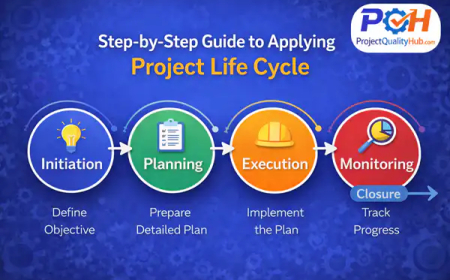
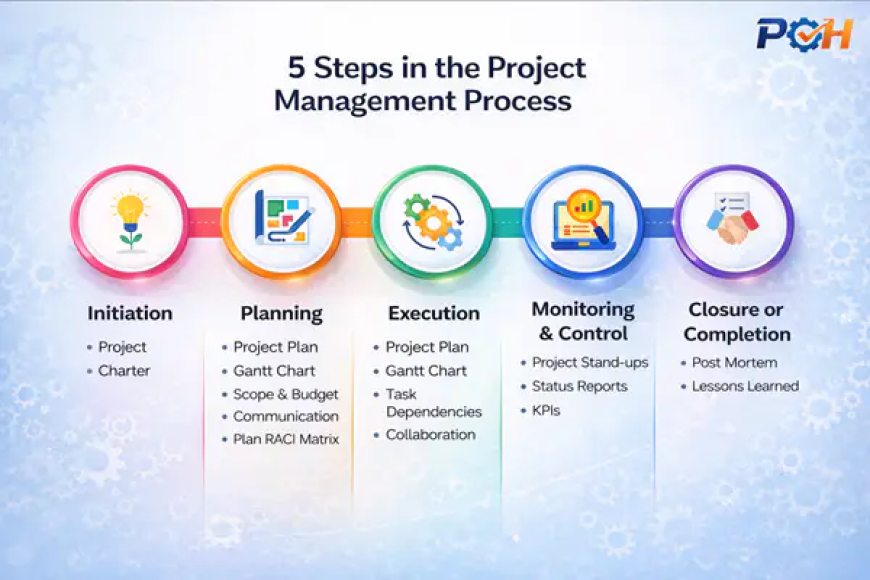
Most projects follow 5 main phases:
-
Project Initiation
-
Project Planning
-
Project Execution
-
Project Monitoring & Control
-
Project Closure
Think of it like building a house.
First you decide to build it, then design it, then construct it, monitor progress, and finally hand it over.
The 5 Phases of the Project Life Cycle
1. Project Initiation Phase
This is where the project idea is born.
The goal is to answer one important question:
“Should we start this project or not?”
Key activities include:
-
Identifying project objectives
-
Defining project scope
-
Preparing a Project Charter
-
Identifying stakeholders
-
Feasibility analysis
Example:
Suppose a steel plant wants to install a High Pressure Descaling Pump System. Before starting, management evaluates:
-
Cost
-
Benefits
-
Required resources
-
Technical feasibility
If everything looks good, the project is approved.
2. Project Planning Phase
This phase is the backbone of project success.
Many experienced project managers say:
“A well-planned project is half completed.”
In this phase, detailed planning is done.
Key planning activities:
-
Work Breakdown Structure (WBS)
-
Project scheduling
-
Resource planning
-
Cost estimation
-
Risk analysis
-
Procurement planning
-
Communication plan
Tools commonly used:
-
Primavera P6
-
Microsoft Project
-
Gantt Charts
-
Network Diagrams
Example:
If a machine installation takes 60 days, planning will define:
-
Foundation work timeline
-
Equipment delivery schedule
-
Installation sequence
-
Commissioning timeline
Without planning, chaos is guaranteed.
3. Project Execution Phase
This is where actual work begins.
All plans created earlier are now implemented.
Activities include:
-
Team coordination
-
Equipment installation
-
Civil construction
-
Procurement
-
Quality inspections
-
Site supervision
In large industrial projects, execution may involve:
-
Engineers
-
Contractors
-
Vendors
-
Consultants
-
Project managers
Example from real projects:
During equipment erection in a steel plant, daily coordination meetings ensure:
-
Materials are available
-
Workers are assigned
-
Safety rules are followed
Execution consumes maximum project resources and budget.
4. Project Monitoring & Control Phase
Execution without monitoring is risky.
This phase runs parallel with execution.
Project managers constantly track:
-
Schedule progress
-
Cost performance
-
Quality standards
-
Safety compliance
-
Risk management
Common monitoring tools:
-
Earned Value Management (EVM)
-
Progress reports
-
Site inspections
-
Performance metrics
For example:
If a project is 10 days behind schedule, corrective actions might include:
-
Increasing manpower
-
Extending working hours
-
Reordering tasks
Monitoring keeps the project on track.
5. Project Closure Phase
Once all work is completed, the project enters the closure stage.
Activities include:
-
Final inspection
-
Testing & commissioning
-
Client approval
-
Documentation
-
Financial closure
-
Lessons learned report
In industrial projects, this stage may include trial runs and performance testing.
Closure is important because it ensures:
-
All deliverables are completed
-
No pending work remains
-
Knowledge is captured for future projects
Real-Life Example of Project Life Cycle
Let’s understand this with a simple example.
Example: Installing a Water Pump System in a Steel Plant
Initiation
Management approves installation of a high-pressure pump.
Planning
Create Project charter, Engineers create drawings, schedule, and cost estimates.
Execution
Foundation construction, pump installation, piping work.
Monitoring
Daily progress tracking, quality inspection.
Closure
Testing, commissioning, and handing over to operations.
Simple — but powerful.
Common Mistakes in Project Life Cycle
Many projects fail due to these mistakes:
1. Poor Planning
Skipping detailed planning leads to delays.
2. Unclear Scope
Scope creep can destroy schedules and budgets.
3. Weak Communication
Miscommunication between teams creates confusion.
4. Ignoring Risk Management
Unexpected problems can derail projects.
5. Improper Monitoring
Without tracking, problems go unnoticed.
Expert Tips from Real Project Experience
After working on multiple engineering projects, here are some practical lessons:
Tip 1: Spend More Time in Planning
Better planning saves months of trouble.
Tip 2: Communicate Daily
Daily meetings keep everyone aligned.
Tip 3: Track Progress Visually
Use dashboards or Gantt charts.
Tip 4: Document Everything
Documentation protects both engineers and organizations.
Tip 5: Learn from Every Project
Every completed project improves your next one.
Conclusion
The Project Life Cycle is not just a theoretical concept taught in textbooks. It is a practical roadmap that helps turn ideas into successful outcomes.
Whether you are an engineering student, project manager, entrepreneur, or site engineer, understanding these phases can make your projects more organized and efficient.
Remember:
Great projects are not accidental — they are carefully planned, executed, monitored, and completed through a proper project life cycle.
If you master this framework, you can manage anything from small tasks to mega industrial projects.
Frequently Asked Questions (FAQs)
1. What is the Project Life Cycle in simple words?
The Project Life Cycle is the structured process that guides a project from idea to completion through defined phases.
2. How many phases are in a Project Life Cycle?
Most project management frameworks include five phases:
-
Initiation
-
Planning
-
Execution
-
Monitoring & Control
-
Closure
3. Why is the Project Life Cycle important?
It helps manage projects effectively by improving:
-
Planning
-
Resource management
-
Risk control
-
Project success rate
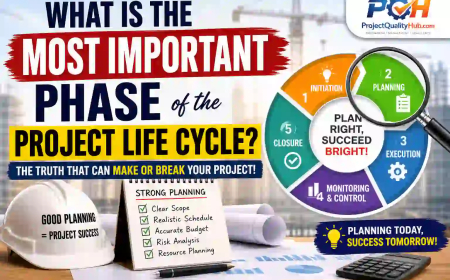
4. What is the most important phase of the Project Life Cycle?
Many experts consider Project Planning the most important phase because good planning prevents major problems later.
5. Who uses the Project Life Cycle?
It is used by:
-
Engineers
-
Project Managers
-
Construction Companies
-
IT Professionals
-
Manufacturing Industries
Basically, anyone managing projects.
Useful Engineering Calculators for Initiation & Planning stage
- MS Plate Weight Calculator
- Flat Bar Weight Calculator
- Seamless Steel Pipe Weight Calculator
- Round Bar Weight Calculator
- Steel Beam Weight Calculator