Tool Box Talk (TBT) for Site Work: Complete Practical Guide
Learn Tool Box Talk (TBT) for site work execution, why it matters, how to conduct it, real examples, safety tips, and common mistakes.
 Suraj Manikpuri
The Small Meeting That Prevents Big Accidents
Imagine this.
A team of 20 workers arrives at a construction site early in the morning. Everyone is eager to start work — welding, lifting, grinding, installation.
But no one talks about the risks.
No one checks the hazards.
No one reminds workers about PPE.
By afternoon, a small mistake turns into a serious accident.
Sadly, this situation happens on many sites.
That is exactly why Tool Box Talk (TBT) exists.
A Tool Box Talk for site work execution is a short safety discussion held before starting work. It usually lasts 5–10 minutes, but its impact can prevent injuries, equipment damage, and costly delays.
In many industries like steel plants, construction projects, oil & gas sites, and fabrication yards, TBT is considered one of the most effective safety practices.
Simple meeting. Powerful results.
What is Tool Box Talk (TBT)?

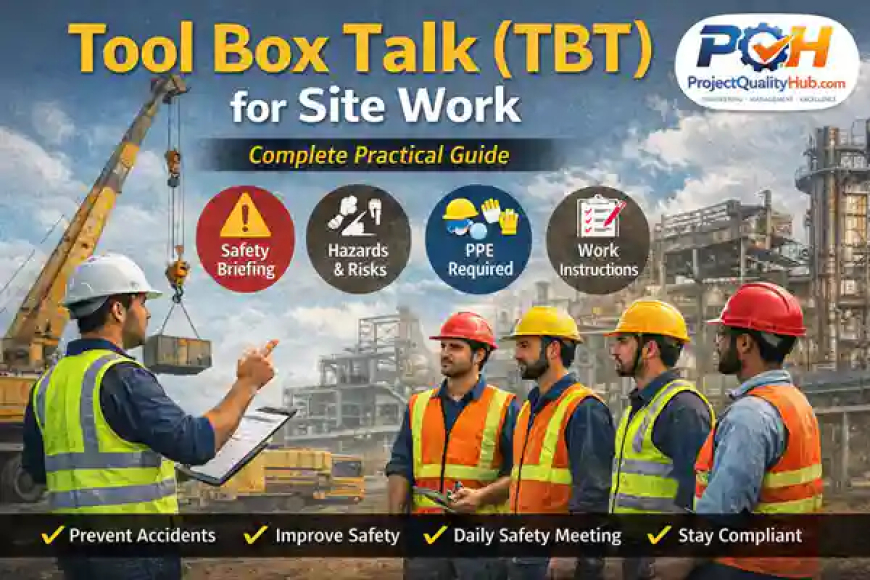
A Tool Box Talk (TBT) is a short safety briefing conducted at the worksite before starting daily activities.
It is usually led by:
-
Site engineer
-
Supervisor
-
Safety officer
The goal is simple:
Explain today's work, identify hazards, and remind workers about safety precautions.
Think of it like a daily safety alignment meeting.
Just like a cricket team discusses strategy before entering the field, workers discuss safety before starting the job.
Why Tool Box Talk is Important for Site Work
Many accidents on site happen not because workers are careless, but because they are unaware of the risk.
TBT helps in:
1. Hazard Awareness
Workers learn about possible risks such as:
-
Falling objects
-
Electric shock
-
Lifting hazards
-
Working at height
2. Safety Communication
Workers understand the correct work method and precautions.
3. Team Coordination
Everyone knows:
-
Who will do what
-
Where work will happen
-
Which equipment will be used
4. Accident Prevention
A simple reminder like “Do not stand under suspended load” can prevent serious injury.
5. Safety Culture
Regular TBT builds a strong safety mindset on site.
What Topics Are Covered in a Tool Box Talk?
A good Tool Box Talk for site work execution covers these key points.
Work Description
What work will be done today?
Example:
-
Pump installation
-
Structural erection
-
Welding work
-
Equipment maintenance
Tools and Equipment
Workers must know which tools will be used.
Example:
-
Grinder
-
Welding machine
-
Chain pulley block
-
Torque wrench
Hazard Identification
Potential risks must be explained clearly.
Example:
-
Working at height
-
Hot work sparks
-
Pinch points
-
Electric hazards
Required PPE
Workers must wear proper protection.
Typical PPE includes:
-
Safety helmet
-
Safety shoes
-
Gloves
-
Safety goggles
-
Reflective jacket
Safety Instructions
Clear instructions are given such as:
-
Follow lifting plan
-
Use barricading
-
Do not bypass safety systems
Real Example: Tool Box Talk in a Steel Plant Project
Let me share a practical example.
During a pump installation project in a steel plant, the team planned to lift a heavy motor using a crane.
Before starting work, the supervisor conducted a Tool Box Talk.
He explained:
-
Weight of the motor
-
Lifting points
-
Crane capacity
-
Signal communication
-
Safe distance from load
Workers were reminded:
“Never stand under the suspended load.”
That simple reminder prevented a dangerous situation when the load slightly swung during lifting.
Sometimes a 5-minute talk prevents a lifetime accident.
Step-by-Step Guide to Conduct an Effective Tool Box Talk
Step 1: Gather the Team
Call all workers at the work location before starting work.
Preferably conduct TBT at the actual work area.
Step 2: Explain Today's Work
Briefly describe:
-
Work scope
-
Work location
-
Equipment involved
Keep it simple and practical.
Step 3: Identify Hazards
Explain risks clearly.
Example:
-
Working at height
-
Moving machinery
-
Hot work sparks
Encourage workers to share their observations.
Step 4: Discuss Safety Precautions
Explain how to avoid accidents.
Examples:
-
Use full body harness
-
Follow lockout-tagout
-
Maintain housekeeping
Step 5: Check PPE
Ensure all workers are wearing:
-
Helmet
-
Gloves
-
Safety shoes
No PPE → No work.
Step 6: Record Attendance
Workers sign the TBT register or form.
This ensures accountability and documentation.
Advantages of Tool Box Talk
Improves Safety Awareness
Workers become more alert about hazards.
Reduces Accidents
Many incidents are prevented through daily safety reminders.
Builds Team Communication
Workers and supervisors communicate openly.
Improves Productivity
Safe work means fewer interruptions and delays.
Compliance with Safety Standards
TBT supports compliance with:
-
ISO 45001
-
Construction safety regulations
-
Industrial safety guidelines
Disadvantages of Tool Box Talk
Although very useful, some challenges exist.
Workers May Ignore It
If TBT becomes routine and boring, workers may not pay attention.
Poor Communication
If the supervisor explains poorly, workers may not understand.
Time Pressure
Some teams skip TBT to save time.
But skipping TBT often leads to bigger losses later.
Common Mistakes During Tool Box Talks
Reading From Paper Without Explanation
Workers lose interest quickly.
Too Long Meetings
TBT should be 5–10 minutes only.
No Worker Interaction
Workers should be encouraged to ask questions.
Same Topic Every Day
Variety keeps workers engaged.
No Hazard Explanation
Talking about safety without mentioning real hazards reduces effectiveness.
Expert Tips for Effective Tool Box Talks
From real site experience, these tips work best.
Keep It Short and Practical
Workers prefer quick and clear instructions.
Use Real Examples
Explain actual incidents that happened on site.
Ask Questions
Example:
“Where should you stand during lifting?”
Workers answering improves understanding.
Show Tools and Equipment
Practical demonstration is more effective than theory.
Conduct TBT Near Work Area
Workers understand hazards better when they see the environment.
Conclusion
A Tool Box Talk (TBT) for site work execution may look like a small routine activity.
But in reality, it is one of the most powerful safety tools on any construction or industrial project.
Just 5–10 minutes of discussion can prevent:
-
Serious injuries
-
Equipment damage
-
Project delays
More importantly, it builds a culture where everyone looks out for each other's safety.
Because at the end of the day, every worker deserves to return home safely.
And sometimes, safety begins with a simple conversation.
Frequently Asked Questions (FAQs)
1. What is Tool Box Talk in construction?
Tool Box Talk is a short safety meeting conducted before starting work to discuss hazards, precautions, and work procedures.
2. How long should a Tool Box Talk last?
Typically 5–10 minutes. It should be short, focused, and practical.
3. Who conducts Tool Box Talk?
Usually conducted by:
-
Site supervisor
-
Engineer
-
Safety officer
4. Is Tool Box Talk mandatory?
In many industries and projects, daily Tool Box Talk is mandatory as part of safety management.
5. What topics can be covered in Tool Box Talk?
Common topics include:
-
Working at height
-
Hot work safety
-
Electrical safety
-
Lifting operations
-
PPE awareness