
What is XRD Machine in Lab? From Basics to Advanced (Engineer’s Guide)
Learn what an XRD machine is, how it works, and its real uses in labs with simple explanations and practical examples.
 Suraj Manikpuri
Introduction
First time jab maine XRD machine lab mein dekhi, I thought — “yeh sirf research log use karte honge.”
But jab actual project mein steel quality issue solve karna tha… tab samajh aaya:
👉 XRD is not just a lab machine — it’s a decision-making tool.
Agar aap engineer ho, QA/QC mein ho, ya student ho, toh XRD samajhna aapko ek real technical edge deta hai.
👉 Simple language mein:
XRD machine material ke andar kya chal raha hai — woh clearly bata deta hai.
Let’s understand it from basic to expert level.
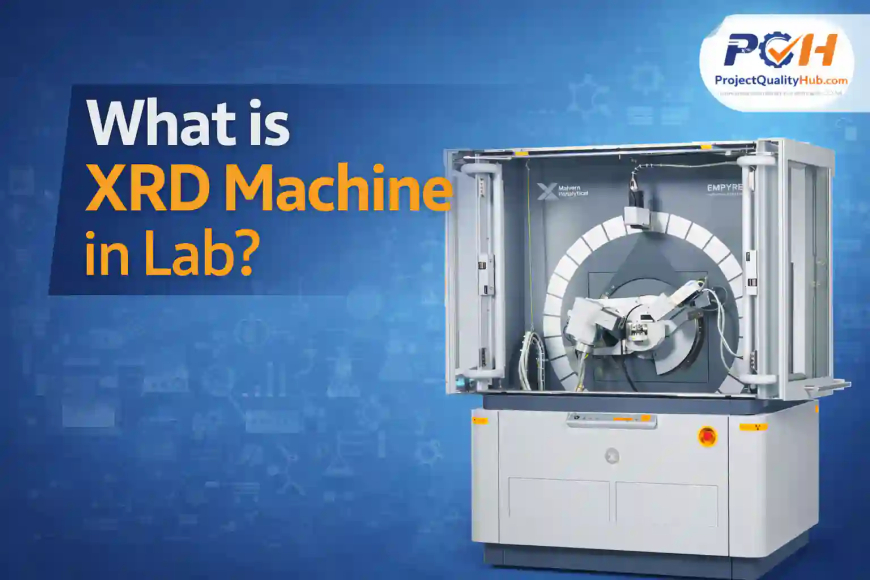
📌 What is XRD Machine in Lab?
XRD (X-Ray Diffraction) Machine ek advanced analytical instrument hai jo use hota hai:
👉 Crystal structure, phase composition, aur atomic arrangement identify karne ke liye
Simple Definition:
“XRD machine uses X-rays to analyze how atoms are arranged inside a material.”
👉 Hinglish mein:
“Material ke andar atoms ka pattern kya hai — XRD usko decode karta hai”
⚙️ How XRD Machine Works (Simple + Technical)
Basic Concept:
- X-rays sample par fall karte hain
- Atoms se interact karke diffract hote hain
- Detector diffraction pattern record karta hai
- Software graph generate karta hai
🔍 Expert Insight (Important)
XRD ka core principle hai:
👉 Bragg’s Law
👉 Diffraction angles → interatomic spacing calculate karte hain
👉 Simple samjho:
“Angle + intensity = structure information”
📊 What Output Does XRD Give?
Most beginners sirf “graph” bolte hain… but actual mein XRD bahut powerful data deta hai:
XRD Analysis Can Tell:
- ✅ Phase identification (material ka type)
- ✅ Phase purity (kitna pure hai)
- ✅ Crystallite size
- ✅ Residual stress
- ✅ Texture (grain orientation)
- ✅ Lattice parameters
👉 Hinglish:
“Sirf material kya hai nahi… kitna strong hai aur kaise behave karega — yeh bhi pata chalta hai”
🧪 Where XRD is Used (Real Industry Applications)
🏗️ Construction & Cement
- Clinker phase analysis
- Strength prediction
⚙️ Metallurgy
- Residual stress measurement
- Failure analysis
💊 Pharmaceuticals
- Drug composition & stability
🔋 Energy (Battery Industry)
- Cathode/anode structure analysis
🧪 Research Labs
- Nanomaterials
- Thin films
- Crystal studies
🧠 Real-Life Case Study (From Site Experience)
Ek cement-based project mein issue aa raha tha:
👉 Concrete strength expected se kam thi
Normal tests:
- Compressive strength
- Chemical analysis
👉 Clear answer nahi mila
Phir XRD test kiya gaya:
👉 Result:
- Improper phase formation detected
👉 Action:
- Raw material composition adjust kiya
👉 Final Result:
- Strength improve + quality stabilized
Lesson:
👉 XRD helps when normal testing fails.
🛠️ Step-by-Step: How XRD Testing is Done
Step 1: Sample Preparation
- Powder form mein convert karna
Step 2: Mounting
- Sample holder mein fix karna
Step 3: X-ray Exposure
- Controlled X-ray beam apply
Step 4: Data Collection
- Detector diffraction pattern capture karta hai
Step 5: Software Analysis
- Peaks match kiye jaate hain database se
👉 Common software: HighScore, Match
⚙️ Advanced Features of Modern XRD Machines
Aaj ke advanced XRD systems (like industrial diffractometers) mein:
- 🔹 Fully automated sample handling
- 🔹 Multi-sample batch testing
- 🔹 High-resolution detectors
- 🔹 Thin film analysis
- 🔹 In-situ (live condition testing)
- 🔹 SAXS / WAXS capability
👉 Hinglish:
“Modern XRD = smart machine + intelligent software”
⚖️ Advantages & Disadvantages
✅ Advantages:
- Non-destructive testing
- High accuracy
- Detailed material insight
- Multi-industry use
❌ Disadvantages:
- High cost
- Skilled interpretation needed
- Sample preparation critical
- Amorphous materials ke liye limited
❌ Common Mistakes (Jo Beginners Karte Hain)
- Poor sample grinding
- Incorrect peak interpretation
- Calibration ignore karna
- Database mismatch
- Sirf graph dekh ke conclusion nikalna
👉 Reality:
XRD result samajhna = skill + experience
💡 Expert Tips (Real Experience Se)
- 🔹 Always use standard reference database (PDF/JCPDS)
- 🔹 Sample preparation pe compromise mat karo
- 🔹 Calibration regular check karo
- 🔹 Peak intensity vs position dono analyze karo
- 🔹 Complex cases mein expert consult karo
👉 Golden Tip:
“Machine data deta hai, but decision engineer leta hai.”
🏁 Conclusion
What is XRD Machine in Lab?
👉 It’s not just a testing device — it’s a material intelligence tool
Agar aap engineer ya student ho:
👉 XRD samajhna aapko average se expert bana sakta hai
👉 Especially QA/QC, R&D, aur material testing fields mein
Final Thought:
👉 “Jo cheez aankhon se nahi dikhti, XRD usko scientifically prove karta hai.”
❓ FAQs
1. What is XRD machine used for?
It is used to analyze crystal structure, phases, and material composition.
2. Is XRD destructive testing?
No, it is a non-destructive technique.
3. What is Bragg’s Law in XRD?
It is the principle used to calculate atomic spacing using diffraction angles.
4. Can XRD detect impurities?
Yes, even small impurity phases can be detected.
5. Which industries use XRD?
Construction, metallurgy, pharma, energy, and research labs.
Image credit: https://www.malvernpanalytical.com/en/products/product-range/empyrean-range/empyrean
Related Articles
- Complete Sample Preparation Equipment List for Industrial R&D & QC Labs
- Metallurgical Lab Equipment Guide for Engineers
- Crushing Equipment for Sample Preparation in Industrial Labs
- Grinding & Pulverizing Equipment for Industrial Labs
- Sieving & Size Classification Equipment for Laboratory Testing
- Coal Testing Equipment Guide for Labs